
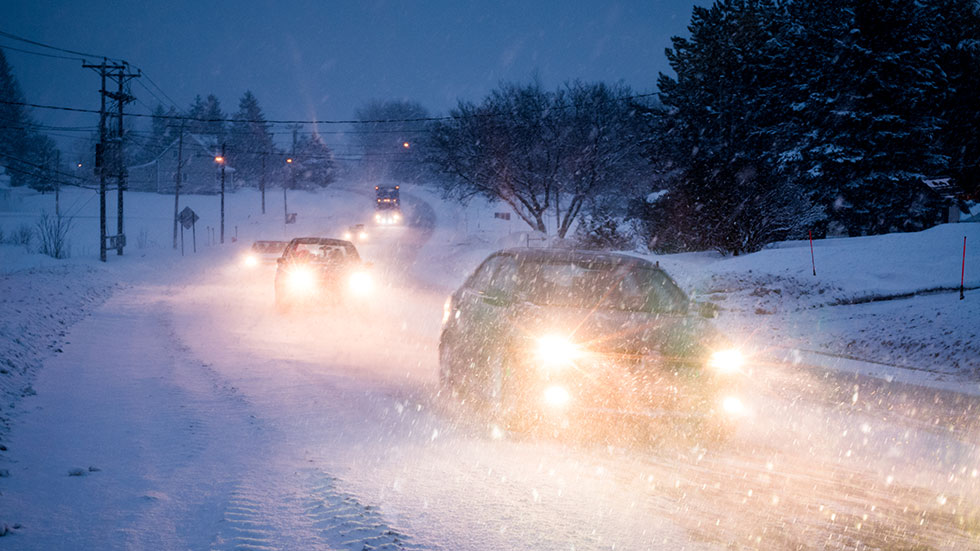
Caught in winter storm or blizzard conditions? AAA offers tips on what to do before, during, and after a strong winter storm to stay safe on the roadways.
OKLAHOMA CITY – Jan. 22, 2026 – Imagine trying to drive through a snow globe that’s just been shaken. That’s what it can feel like when you’re driving in a winter storm or blizzard.
Blizzards are the most intense winter storms, and surprisingly, they can happen even when no snow is falling. To be classified as a blizzard, a storm must have either snow falling or blowing around, sustained winds stronger than 35 miles per hour, and visibility of less than a quarter-mile for at least three hours.
Why are winter storms so dangerous?
Hazardous storms and inclement weather are a factor in an average of nearly half a million crashes and more than 2,200 traffic crash deaths nationwide every winter, according to the AAA Foundation for Traffic Safety. AAA is encouraging drivers to have safety in mind if they must venture out on the wintry roadways.
On average, about one-third (32%) of crashes during the winter occur in adverse weather or road surface conditions according to the AAA Foundation for Traffic Safety.
When you’re driving in a winter storm, conditions can turn life-threatening fast. Strong winds combined with bitterly cold air can create dangerously low wind chills, often well below freezing. When exposed to that kind of cold, you run a real risk of hypothermia or frostbite, which can set in within minutes.
In addition, blizzards can make it easy to lose your bearings. Whipping or drifting snow can create whiteout conditions that reduce visibility to nearly zero. You may not be able to see even a few feet ahead—making driving in whiteout conditions extremely dangerous.
What to know if you must drive during a winter storm
“The most effective travel precaution you can take during an intense winter storm: Stay off the roads entirely,” said Shawn Steward, Public Affairs manager for AAA Oklahoma. “Of course, that’s not always possible in an emergency or for critical workers. So being well prepared and knowing how to manage the situation if you are caught or stranded in heavy snow or blizzard conditions can help limit the dangers.”
If you must drive in snowy or blizzard conditions, here’s how to prepare, according to AAA:
-
Know the forecast: Check a trusted weather source before and during a winter storm. Get a sense of its timing, when conditions will be worst, and try to plan around that. Load a weather app with live radar to your phone to monitor the progression and location of the snow.
-
Check road conditions: Most state transportation departments offer an online or mobile app-based resource that provides live status of winter related road conditions, detours or closures.
-
Communicate your plans: Let someone know where you’re going, the route you’re taking, and your estimated arrival time so that your location can be more easily identified if necessary.
-
Have a plan for who you’ll call: If you get stranded in the snow, your vehicle breaks down or you are involved in a crash, plan in advance for who you will call in each instance, whether it is AAA Roadside Service or other tow provider, law enforcement or other emergency provider. Program key emergency numbers into your phone, so you can access them quickly, if needed.
-
Pack a winter emergency kit: Keep tools and essentials in your vehicle to be prepared for winter emergencies. Your roadside emergency kit should include at least the following:
-
jumper cables or portable jump start pack
-
snow scraper and brush
-
shovel
-
bag of traction material – such as kitty litter, salt, or sand – or a traction mat
-
reflective triangles and road flares
-
flashlight
-
first-aid kit
-
bottled water and nonperishable snacks
-
warm blanket or sleeping bag
-
extra warm clothes such as coats, hats, gloves
-
phone charging cable and/or power bank
-
Also consider purchasing a severe weather road kit that combines many of these essentials in one convenient package.
-
Prepare your car: Safe winter driving starts before you hit the road. Make sure your headlights, taillights, and fog lights work properly—not only so that you can see while driving in a blizzard, but so that others can see you. Check that your windshield wipers can handle heavy snow and ice and top off your washer fluid, preferably with a winter blend, anti-icing fluid. If you live in an area prone to severe winter storms, consider switching to winter tires and keeping your gas tank at least half full to prevent fuel line freeze-up.
-
Clear windows: Fully defrost your windows before putting the car in drive to maximize visibility.
What to do if you get caught driving in a blizzard
If you get caught driving when blizzard conditions hit, stay calm and focused so that you can make smart decisions.
-
Pull over when it’s unsafe to continue: In a blizzard, visibility can drop to near zero and roads become dangerously slick. Even the most winter-ready vehicles can lose traction on ice. If conditions worsen, get off the road as quickly and safely as possible—ideally at a rest stop, in a parking lot, or on the shoulder if safe to do so. Once you’ve stopped, stay in your vehicle for shelter. It provides protection from the cold, wind, and blowing snow while you wait for conditions to improve, for help to arrive, or for the blizzard to pass.
-
Use your hazard lights correctly: Hazard lights signal to other drivers and emergency services that your vehicle has stopped or become disabled. Turn them on if you’ve pulled over or if your car can’t move safely. Avoid using them while driving, as blinking hazards on a moving vehicle can confuse other drivers.
-
Practice patience and drive slowly: You can’t outrun a blizzard. Expect delays and allow yourself plenty of extra time to reach your destination. Drive safely below the speed limit, increase your following distance, and avoid sudden braking or acceleration to maintain control.
What to do if you get stranded while driving in a blizzard
Whether your car gets stuck or conditions have deteriorated to the point you can’t safely drive, AAA says a few key steps can help you stay as warm and safe as possible.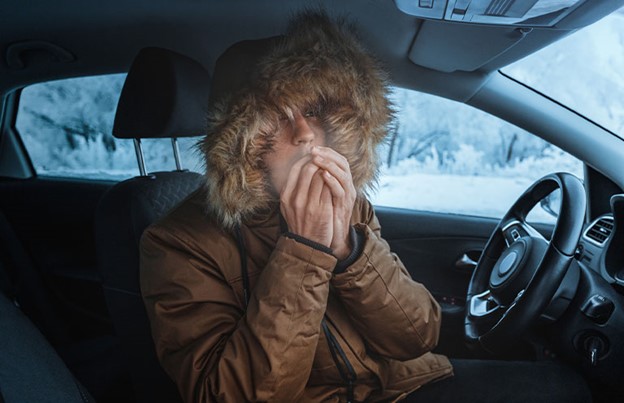
-
Shelter in place: If you’ve pulled over in a blizzard and there’s no building nearby, your vehicle becomes your shelter. Stay inside it at all costs. Don’t wander away; blowing snow and near-zero visibility can make it dangerously easy to lose sight of your car.
-
Insulate your body: Layer anything you have available on and around yourself to retain body heat. Blankets, coats, and even floor mats can help keep you warm.
-
Use your car heater cautiously: If it’s safe to run the engine, you can use the heater for short intervals to stay warm. Just make sure the exhaust pipe is completely clear of snow or ice to prevent carbon monoxide from building up inside the car and creating a deadly situation. Crack a window slightly for ventilation.
-
Make yourself noticeable: Attach a brightly colored item—such as a scarf or handkerchief—to your car’s antenna, side mirror, or window. If you have traffic flares or reflective markers in your emergency kit, use them when visibility improves to help rescuers spot you.
“If you ever find yourself driving in heavy snow or a blizzard, these tips will help you maneuver through it as safely as possible,” AAA’s Steward said. “But remember, the best way to stay safe during a winter storm is simple: Don’t drive unless you absolutely must.”
About AAA
AAA provides automotive, travel, and insurance services to more than 65.2 million members nationwide and more than 450,000 members in Oklahoma. AAA advocates for the safety and mobility of its members and has been committed to outstanding road service for more than 100 years. AAA is a non-stock, membership corporation working on behalf of motorists, who can map a route, find local gas prices and electric vehicle charging stations, discover discounts, book a hotel, and track their roadside assistance service with the AAA Mobile app (AAA.com/mobile) for iPhone, iPad and Android. For more information on joining or renewing a Membership, visit www.AAA.com.


Get Local News!
