
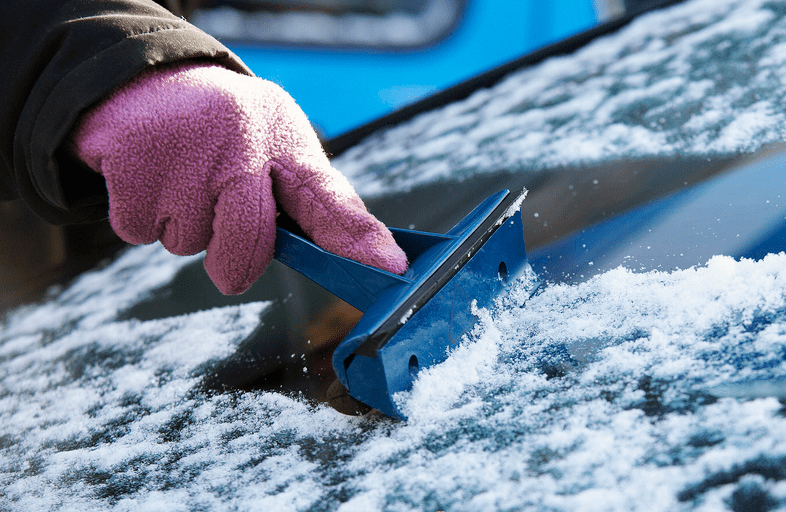
OKLAHOMA CITY – Jan. 25, 2026 – Now that the winter storm has passed, leaving behind snow-packed, icy roads and parking lots and frigid temperatures, AAA is urging caution and offering tips for drivers dealing with the frozen aftermath.
Snow- and Ice-Covered Vehicles
“First, before getting on the road, it’s important to take the time to properly and completely remove snow and ice from your vehicle,” said Shawn Steward, public affairs manager for AAA Oklahoma. “There is a right way and a wrong way to remove ice from your windows, door locks and door seals. The wrong way can cause expensive damage to your vehicle.”
Steward reminded drivers to clear snow from all windows and front and rear lights so they can see and be seen by other drivers. And removing snow and ice from vehicle roofs, hoods and trunks can prevent visibility problems for other drivers or flying projectiles that can damage other vehicles.
AAA offer these tips for properly removing snow and ice from your vehicle:
-
Frozen vehicle doors. Do not attempt to force the door open by pulling on the door handle. Instead, apply a commercial deicer spray around the door seal. Then, apply firm but gentle pressure to the door, pushing it in slightly to break the ice seal before gently pulling. Apply silicone spray, WD-40, or petroleum jelly to your door seals to prevent them from freezing in the future.
-
Frozen windows: Do not continue to push the power window buttons if the window is frozen, it can damage the mechanics inside the door, leading to costly repairs, and can also cause the window to break. Instead, Start the car and run the heater on high with the air on “recirculate” to help melt remaining ice.
-
Frozen locks: Never use water to thaw frozen locks. If you do not have a key fob, use commercial deicing products on the lock. If you don’t have deicer readily available, put a little hand sanitizer or isopropyl alcohol on the key. Insert the key and gently turn. Just a drop or two is enough. You can also use a lighter to heat the key.
-
Frozen windshield wipers: If windshield wipers are frozen to the windshield, use the heater and defroster to melt the ice before turning the windshield wipers on. When you arrive at your destination remember to pull the windshield wipers away from the windshield to prevent refreezing.
-
Ice coated windshield/windows: Never pour hot water on windshield or windows, this can cause the glass to break. Use your vehicle’s defrost setting to melt ice for easier removal. Don’t use windshield wipers to remove ice – this will damage the blades. Clear all vehicle windows of ice and snow completely, along with headlights, taillights and brake lights.
Dead Batteries
Another problem that becomes more frequent in extremely cold weather is dead car batteries.
“A car battery loses a third of its power in freezing weather because as the air outside cools, the oil in your car thickens, parts move slower, and your battery has to use more power to turn over and start the engine,” AAA’s Steward said. “If the temperature drops to zero or below, your battery has only HALF its power to start the vehicle. This can especially become a problem if your battery is older – the typical lifespan of a vehicle battery is 3-5 years – because older batteries gradually lose charge and ability to deliver the needed cold-cranking amps to start a car in frigid temperatures.
AAA recommends having your battery tested regularly to make sure it is ready for the extremes. Steward said dead batteries are one of the leading causes for members to request AAA emergency roadside assistance. “We anticipate a very busy day on Monday when people go back to work and school and discover that their car won’t start.”
AAA offers these tips to avoid battery issues:
-
Park your car in a garage, if possible. The less frigid the air is around your car, the better for your battery.
-
Turn off your lights, wipers, and heater before you turn off your engine at the end of a drive to prevent an unnecessary drain on the battery the next time you start your car.
-
Unplug phone chargers and USB cables for devices like iPods as soon as you turn off your engine (for the same reason as #2).
-
Avoid using your car’s heater longer than you have to; heaters put high demands on your battery.
-
If you see corrosion on your battery, clean it or have it cleaned by a trained technician.
-
If you consistently go two weeks or longer without using your car during the winter, invest in a battery tender to keep the battery charged.
-
If you plan on not using your car for an extensive period of time during winter, it is important to turn it on every day and take it for a short drive or let it run idle for 15 – 20 minutes so that it reaches operating temperatures. This provides current to the battery, allowing it to regain its charge. the oil in your car thickens. Parts move slower, and your battery has to use more power to turn over and start the engine. If the temperature drops to zero or below, your battery has only HALF its power to start the vehicle.
Slick Streets
“Snow-covered and icy roads, and parking lots will persist for the next few days until sun and higher temperatures can have an impact in helping clear surfaces. Salt and other materials applied to the roads to remove ice do not work as well in extreme cold. Drivers are urged to use caution as ice-coated roadways are expected to remain dangerous into mid week,” Steward said. “Please stay home until conditions improve unless you absolutely must be out. Fewer vehicles on the road also provides a safer environment for road crews and first responders, including tow drivers, to do their jobs.”
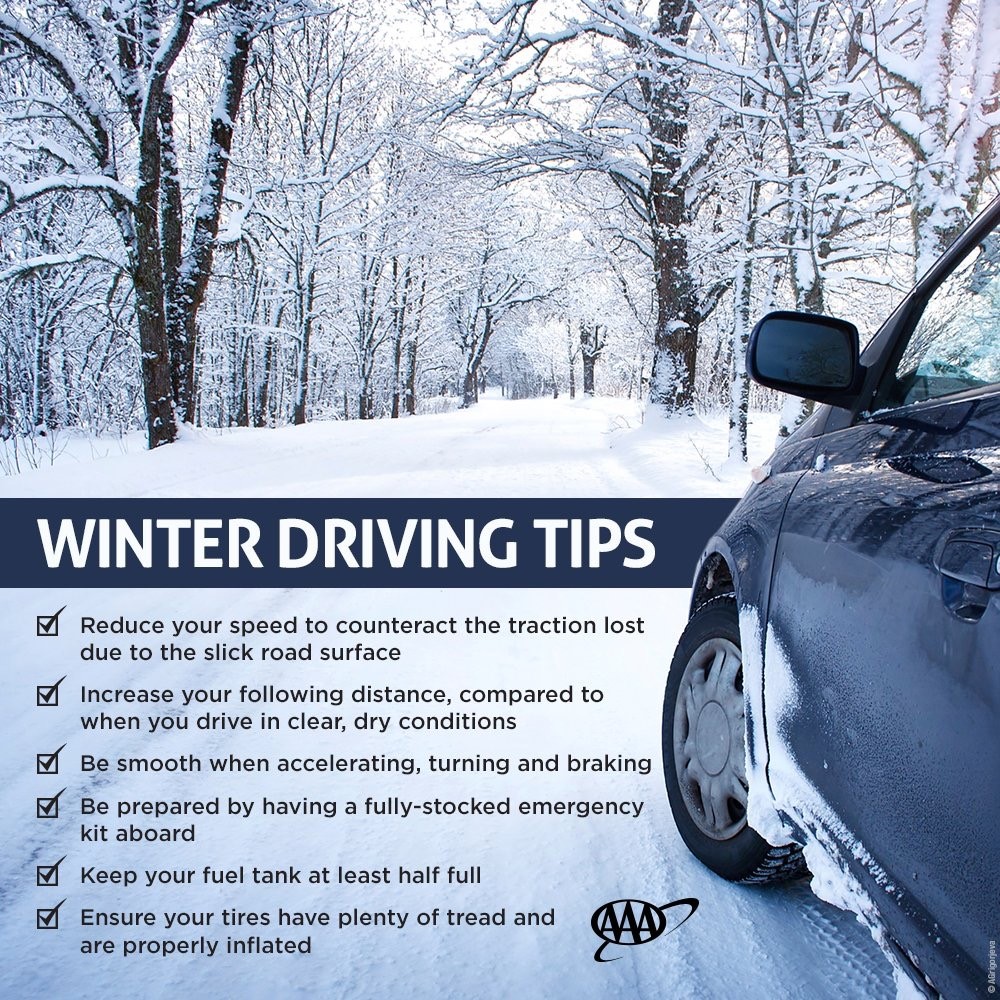
AAA offers the following safe driving tips for those who must be on the roads:
-
Slow down. Accelerate, turn and brake gradually. Adjust your speed to the road conditions and leave ample room to stop.
-
Do not tailgate. Normal following distances of three to four seconds on dry pavement should be extended to a minimum of eight to ten seconds when driving on slippery surfaces. Allow at least three times more space than usual between you and the car in front of you. The extra time will provide additional braking room should a sudden stop become necessary.
-
Watch the traffic ahead. Slow down immediately at the sight of brake lights, fishtailing cars, sideways skids or emergency flashers ahead.
-
Minimize the need to brake on ice. If you’re approaching a stop sign, traffic light or other area where ice often forms, brake early on clear pavement to reduce speed. Maintaining control of your vehicle is much more difficult when braking on ice-covered roadways.
-
Control the skid. Slamming on the brakes can make the skid even worse. In the event of a skid, ease off the accelerator and steer in the direction you want the front of the car to go.
-
Never use cruise control on slippery roads. Patches of ice can cause unexpected wheel spin and use of cruise control can slow driver response.
-
Avoid unnecessarily changing lanes. This increases the chances of hitting a patch of ice between lanes that could cause loss of vehicle control.
-
Use extreme caution on bridges and overpasses. Black ice typically forms first in shaded areas of the roadway and on bridges and overpasses that freeze first and melt last. Although the road leading up to a bridge may be fine, the bridge itself could be a sheet of ice.
-
Do not brake and turn at the same time. Asking your vehicle to do two things at a time makes it more likely that your tires will lose traction. Brake first, then turn, then accelerate.
-
Drive-distraction free. Do not text or engage in activities that will distract you while driving. If driving with a passenger, ask them to carry out activities that would otherwise distract you from driving safely.
-
Move over for first responders. Move over one lane for law enforcement and emergency roadside personnel assisting motorists. If you are unable to move over, slow down to a safe speed when passing. It is the law.
-
Always carry a winter emergency kit in your car. AAA recommends that a winter emergency kit include:
-
Abrasive material (sand, snow melt products, cat litter) or traction mats
 Snow shovel (folding shovels are available)
-
Flashlight with extra batteries
-
De-icer
-
Ice scraper with brush
-
Jumper cables
-
Extra warm clothing (gloves, hats, scarves), and blankets
-
Reflective vest
-
Warning devices (flares or reflective triangles)
-
Drinking water and non-perishable snacks for both human and pet passengers
-
If traveling with an infant, be sure to pack extra food and supplies
-
First-aid kit
-
Basic toolkit (screwdrivers, pliers, adjustable wrench)
-
Mobile phone (and charger) pre-programmed with rescue apps and important phone numbers including family and emergency services
-
Snacks/drinking water for passengers and any pets
-
Cloth/paper towels
-
About AAA
AAA provides automotive, travel, and insurance services to more than 65.2 million members nationwide and more than 450,000 members in Oklahoma. AAA advocates for the safety and mobility of its members and has been committed to outstanding road service for more than 100 years. AAA is a non-stock, membership corporation working on behalf of motorists, who can map a route, find local gas prices and electric vehicle charging stations, discover discounts, book a hotel, and track their roadside assistance service with the AAA Mobile app (AAA.com/mobile) for iPhone, iPad and Android. For more information on joining or renewing a Membership, visit www.AAA.com.


Get Local News!
