
AAA urges homeowners to plan ahead, stock an emergency kit and make sure property is adequately protected.
OKLAHOMA CITY – As natural disasters become more frequent and severe, homeowners must be more prepared than ever for a fast-moving disaster to strike and how to manage the aftermath. Each year, fires, hurricanes and other natural disasters force more than two million people from their homes according to the U.S. Census Bureau.
According to the nonprofit organization Climate Central, in 2025, there were 23 natural disasters in the United States that each created at least $1 billion in damages, together causing 276 deaths and costing the U.S. $115 billion. With more intense and damaging disasters, coupled with higher replacement and rebuilding costs, the average number of “billion dollar” disasters is on the rise.
Over the past decade, severe storms have caused the highest number of billion-dollar climate disasters (99), followed by tropical cyclones (24), flooding (17), droughts (10), and wildfires (9), according to the National Centers for Environmental Information.
With the expectation of severe spring storms, damaging wildfires in drought-affected areas, and the hurricane season to follow, AAA reminds homeowners to plan and prepare for any possibility.
“The most important part of any plan is ensuring everyone’s safety,” said Dan Scroggins, Vice President, Personal Lines Insurance, AAA. “Having a readily available grab-and-go emergency kit that includes critical documents can make both the evacuation and recovery process more manageable.”
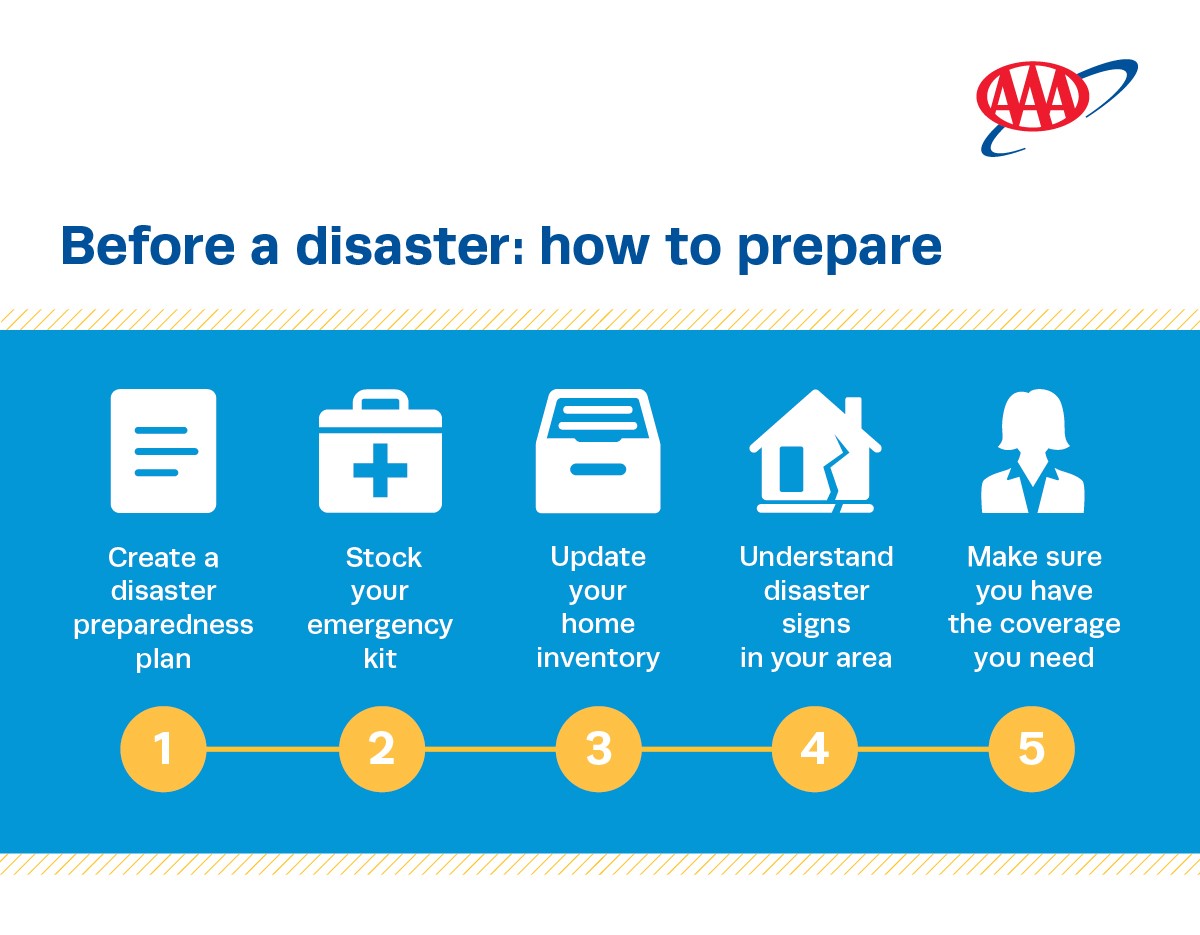
AAA recommends homeowners follow five steps in preparation for a natural disaster:
-
Make a Plan – Develop a family emergency plan including ways to contact each other, alternative meeting locations, and an out-of-town contact. Identify a safe room or safest areas in your home. Research your evacuation route. Be sure to include plans for your pets.
-
Take Inventory – Update your home inventory by walking through your home with a video camera or smart phone. Keep a record of large purchases, including the cost of the item, date purchased, and model and serial numbers if available.
-
Check Your Vehicle – There are a record number of older vehicles on U.S. roadways. Basic maintenance is critical to ensuring that your vehicle will be ready to go when you need it.
-
Protect Your Property – Review your homeowner’s insurance coverage with your advisor to determine if you have adequate protection. Discuss your deductibles. Be aware that flood insurance is not typically covered under your homeowner’s policy. Flooding to your vehicle, however, may be covered. Again, consult your advisor to ensure adequate coverage.
-
Stock a Grab-and-Go Home Emergency Kit – Consider the critical items you might need if:
-
Disaster destroys your home leaving it uninhabitable.
-
Disaster damages your home resulting in significant losses
-
Disaster knocks out electricity, internet and/or cell service to your home for a prolonged period
-
“Homeowners should always have on hand a three-day supply of non-perishable foods, water and medications, including for your pets,” Scroggins added.
Here are 10 essential items for your Home Emergency Kit:
-
Hard copies or electronic records of important documents, such as birth certificates, social security cards, driver’s licenses, passports, insurance cards and medical documents. Best to store these items in a waterproof, grab-and-go carrier
-
Multipurpose tool or can opener for access to those non-perishable foods
-
Flashlight, extra batteries
-
Cell phone with chargers (consider a solar charger and car charger)
-
Prescriptions, first-aid kit
-
Wrench or pliers to turn off utilities
-
Moist towelettes
-
Garbage bags and plastic ties
-
Travel-size personal hygiene products, including toothbrush, toothpaste and hand sanitizer
-
Sleeping bags
Your home emergency kit should be checked every six months to ensure all items are in working order and stored food, water and medications have not expired.
About AAA
AAA provides automotive, travel, and insurance services to more than 65.2 million members nationwide and more than 450,000 members in Oklahoma. AAA advocates for the safety and mobility of its members and has been committed to outstanding road service for more than 100 years. AAA is a non-stock, membership corporation working on behalf of motorists, who can map a route, find local gas prices and electric vehicle charging stations, discover discounts, book a hotel, and track their roadside assistance service with the AAA Mobile app (AAA.com/mobile) for iPhone, iPad and Android. For more information on joining or renewing a Membership, visit www.AAA.com.


Get Local News!

