

Kerr Center for Sustainable Agriculture
What do the Italian Alps and a Wisconsin farmstead have in common? Both have taught recent lessons about how barn swallows (Hirundo rustica) can help control insect pest populations.
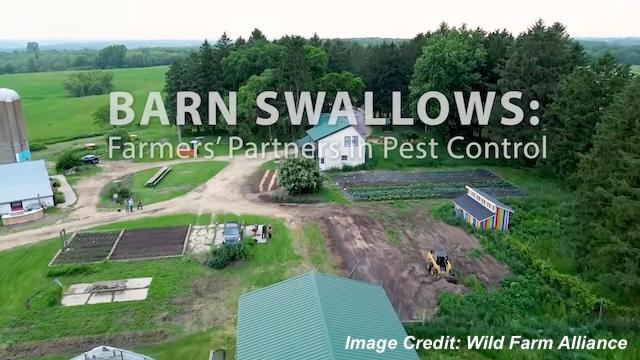
Wisconsin farmers Rufus Haucke and Joy Miller had noticed the swallows nesting in the back of their barn, near the area where they pen their sheep. They also noticed that they have not had problems with fly strike, or myiasis, even though they don’t use the common practice of docking the sheep tails to prevent the condition.
Haucke and Miller suspect that the barn swallows eat enough flies to keep fly strike from becoming a problem in their flock.
Meanwhile, University of Milan graduate student Francesca Roseo has been putting numbers on a similar story. On dairy farms in the Italian Alps, she counted both barn swallows and flies.
Her study found that as barn swallow numbers increased, fly counts went down – substantially. “Farms with barn swallows saw an average 60% reduction in fly activity,” she says.
Roseo suspects that the birds aren’t just eating the bugs – they’re also scaring them away. As she puts it, the swallows’ presence creates a “landscape of fear” that causes flies to avoid the area.
Wild Farm Alliance recently released a short video documentary featuring both Haucke and Miller’s farming practices and Roseo’s academic research.
Although bird species are declining fastest in areas with the most intensive agricultural land use, this is yet another outstanding example of how conservation and agriculture don’t have to be at odds, but can actually support each other.
Click HERE to see the Calendar of Events.

Click the photo to join Friends of the Kerr Center or to make a donation.


Get Local News!

